
Central Heating
Maintenance in
Hertfordshire
Planned care for the whole system — pumps, valves, controls, radiators and water quality — so you find the problems in September, not on the first cold weekend of December.
What heating maintenance actually covers
What it is
A whole-system health check that goes further than a boiler service: pump, motorised valves, thermostats and controls, radiators, TRVs, expansion vessel, filter, inhibitor level and water quality — all inspected, tested and corrected where needed.
Who it's for
Homeowners in older properties, anyone with cold radiators or uneven room temperatures, homes with a system boiler and unvented cylinder, and landlords who want to prevent mid-tenancy breakdowns.
When you need it
Ideally late summer / early autumn, before you turn the system on for winter. Also whenever you've had a big change — new radiators, an extension, a boiler swap.
Why professional help matters
A boiler is only as good as the system around it. Dirty water, a tired pump, a stuck 3-port valve or a dead thermostat will all masquerade as a 'boiler problem' — and get progressively more expensive to ignore.
The cost of leaving it
Central heating problems compound. Small faults become big ones and drag efficiency down along the way.
What can go wrong
- Sludge and magnetite build up inside radiators and the heat exchanger, reducing heat output by 20% or more and shortening pump life.
- A failing pump runs hotter, draws more current and eventually seizes — often taking the PCB with it.
- A stuck 3-port or 2-port valve causes either constant hot water demand or no heating at all, and burns gas 24/7 while you diagnose it.
- Low inhibitor levels lead to corrosion — pinhole leaks in radiators are usually the first symptom.
Common mistakes we see
- Bleeding radiators repeatedly without asking where the air is coming from (usually corrosion producing hydrogen).
- Fitting new radiators onto an unflushed old system and voiding the boiler warranty.
- Assuming a cold radiator at the top of the house is 'just air' when it's a hydraulic balancing problem.
- Ignoring a whirring pump — it's telling you the bearings are on the way out.
Our process
A clear, repeatable system — the same on every job, whether you're a homeowner or a landlord with a portfolio.
- 01
System survey
Every radiator checked for temperature drop and cold spots; controls, valves and cylinder inspected.
- 02
Water quality reading
System water sampled and tested — inhibitor level, magnetite content, pH.
- 03
Corrective actions
Flush or top-up inhibitor, replace failing valves/pumps, rebalance radiators, reset controls — priced up front before we start.
- 04
Retest and verify
Second water reading and full system temperature check to confirm the fixes have worked.
- 05
Report & guarantee
Written report on system condition and any recommendations. 12-month workmanship guarantee on any work carried out.
What you get
Warmer rooms, evenly
Properly balanced radiators with clean water heat up faster and more evenly across the whole house.
Longer boiler life
The cleaner the system water, the longer the heat exchanger and pump last — and the fewer warranty claims you'll need.
Lower gas bills
A system that circulates freely and hits temperature quickly runs the boiler for less time.
Fewer winter breakdowns
Most 'boiler' breakdowns are actually system faults. Fixing them in autumn stops them arriving in January.
Extends warranty compliance
Maintaining water quality and inhibitor level is a manufacturer warranty condition — we document it for you.
One point of contact
Matt owns the visit start to finish. No sub-contractors, no handovers.
Recent heating maintenance work
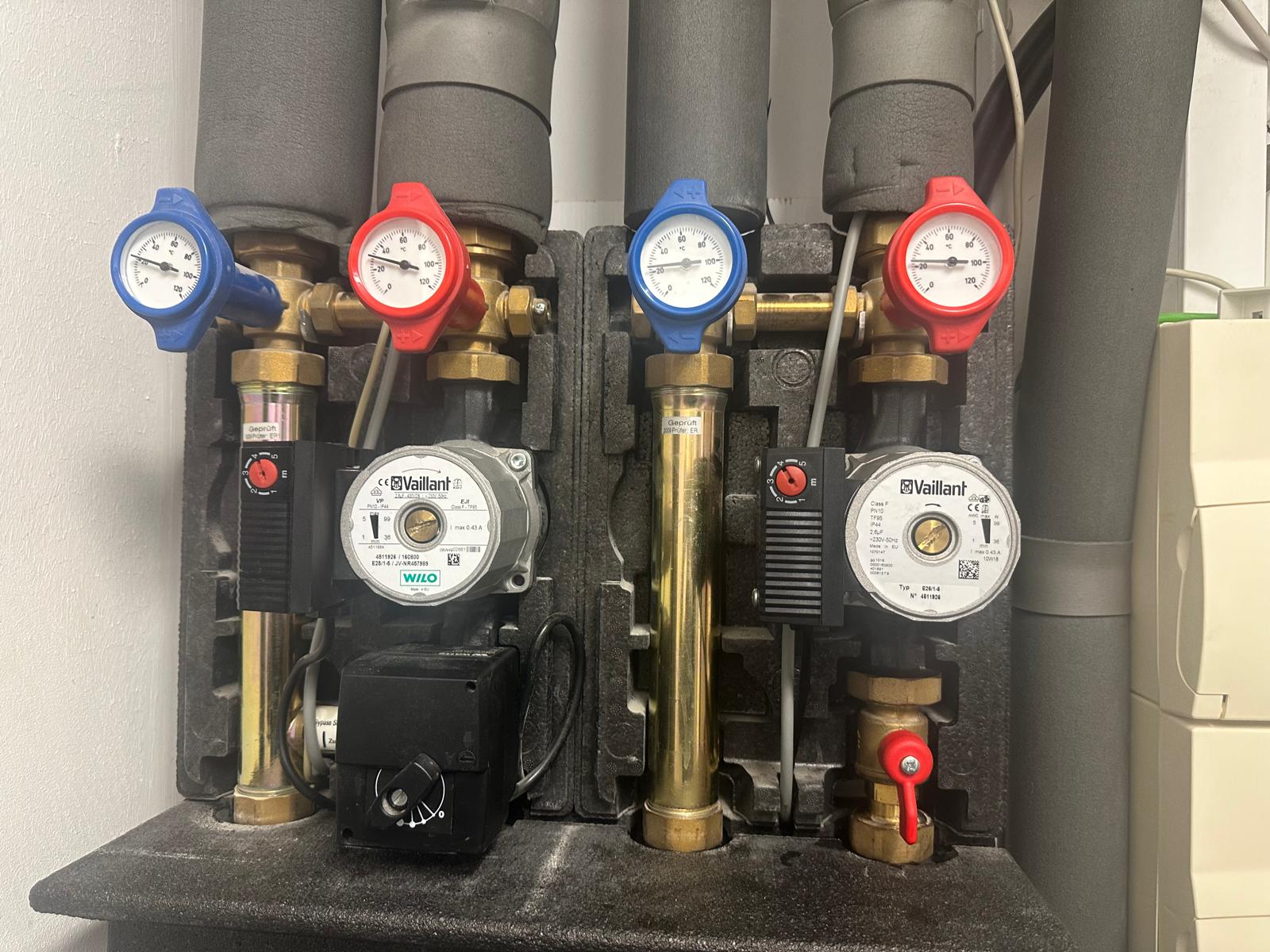
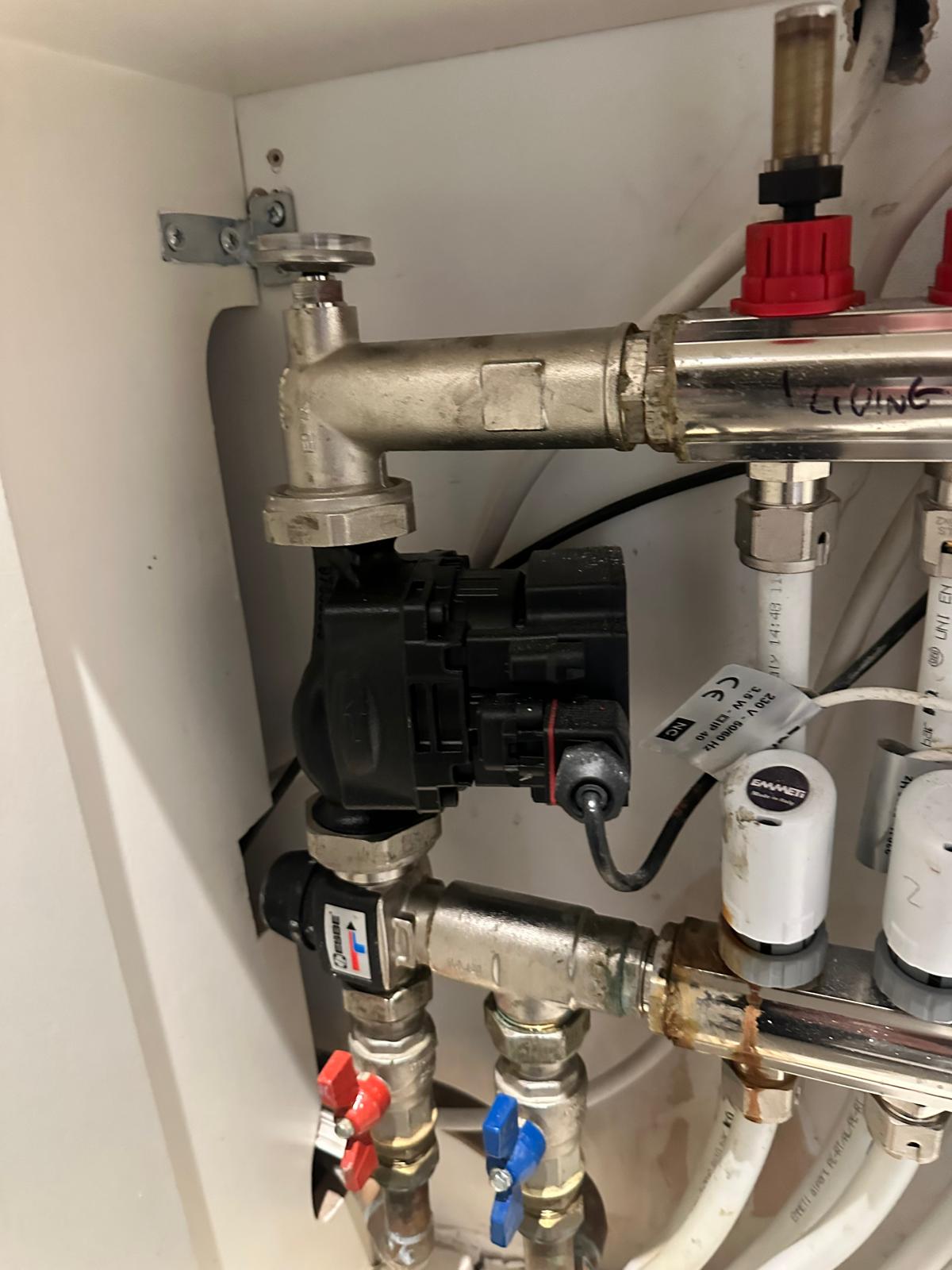
Photos from real jobs completed by Matt and the Premier Heating team.
In detail
Heating maintenance is where the biggest hidden savings live. Here's what a proper visit actually covers.
Water quality & inhibitor
Fresh inhibitor (typically Fernox F1 or Sentinel X100) is what stops the inside of your system from corroding. Levels drop over time, and every time the system is drained. We test the sample against a reference and top up or refill as needed.
Pump & valves
Circulating pumps have a finite life — usually 10–15 years. We check flow rate, current draw and bearing noise. Motorised valves (2-port, 3-port mid-position) are the single most common cause of 'strange' heating behaviour. We test the actuators and replace where necessary.
Radiator balancing
Balancing means adjusting the lockshield on each radiator so hot water reaches every rad at the right rate. A house that's never been balanced almost always has one room too hot and another too cold — and a boiler working harder than it needs to.
Controls, TRVs and thermostats
Failed TRVs stick open (waste gas) or stuck closed (cold room). Old programmers drift out of accuracy. Smart thermostats with weather compensation genuinely reduce gas usage. We'll test what's there and recommend upgrades only where the payback is real.
Unvented cylinders
For homes with an unvented hot water cylinder we can check the expansion vessel charge, temperature and pressure relief valves and the discharge pipework. Matt holds the unvented ticket (G3).
Frequently asked questions
How often should I have heating maintenance done?
Alongside your annual boiler service is ideal. Older systems, systems with a lot of sludge history, or systems in hard-water areas benefit from a check every year; newer systems can go longer between full checks.
How much does it cost?
A whole-system health check is typically priced with your annual service. Corrective work (flush, valve replacement, pump replacement, rebalancing) is quoted up front before any work starts.
Do you offer a service plan?
We can set up an annual visit reminder and pre-book you a slot at the same rate. No monthly direct debit.
How long does a maintenance visit take?
1–2 hours for a whole-system health check; longer if we're carrying out corrective work at the same visit (which we always price up front).
Do you guarantee the work?
Yes — 12-month workmanship guarantee on all work carried out, plus manufacturer warranty on any parts fitted.
Will you spot problems before they cause a breakdown?
That's the whole point. Most winter breakdowns start as small autumn faults.
Do you cover unvented cylinders?
Yes — Matt holds the G3 unvented ticket and we work on unvented systems regularly.
Do you cover my area?
Yes — we cover Watford, Northwood, Rickmansworth, Pinner, Bushey, Hatch End, Stanmore, Middlesex and Greater London. If you're nearby but not listed, please call.
Related services
Areas we cover
Based in Watford, serving Hertfordshire and Greater London.
Need something not listed? Get in touch.
Book a winter-ready heating check.
Ex-British Gas engineer. Whole-system check, written report, no call-out fee.